Limited government
Government power restricted by law and consent.

Limited government is a concept in political philosophy describing a government whose powers are restricted, typically by a constitution or a social contract. It is a key concept in the history of liberalism and a core tenet of democracy.
- earliest_use_of_term
- Late 16th century by King James VI and I
- major_theorist
- John Locke
- core_principle
- Government powers restricted to what the people allow
- associated_concepts
- Constitutionalism, separation of powers, federalism, social contract
Lore & Background
The earliest use of the term 'limited government' dates back to King James VI and I in the late 16th century. The Magna Carta and the U.S. Constitution represent important milestones in limiting governmental power. Scholar Steven Skultety argues that Aristotle's political philosophy in some ways anticipated the idea of limited government, primarily as a tool for limiting civic distrust and enhancing stability, though Aristotle never developed principles and tactics of constitutionalism. John Locke, a liberal philosopher, was an important theorist of modern democratic government. In his Two Treatises of Government, Locke reasoned that men in a state of nature would voluntarily form a government through a social contract, and that government's powers had to be restricted to only what the people allowed. He cited four specific limitations: governing only according to promulgated established laws with equality under the law; laws designed only for the common good; no taxation without representation; and the legislature could not delegate law-making authority without the people's consent. The U.S. James Madison wrote in Federalist No. 51 that security against concentration of powers consists in giving each department constitutional means and personal motives to resist encroachments.
Reader's Guide
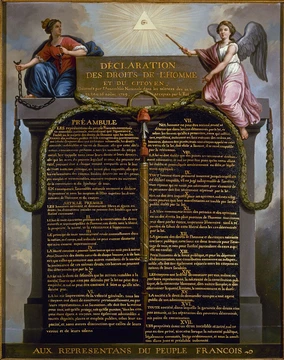
Limited government remains a foundational concept in modern political thought, particularly within liberalism and democracy. Its significance lies in the ongoing tension between governmental authority and individual liberty. John Locke's four limitations—rule of law, common good, no taxation without representation, and non-delegation of legislative power—continue to inform constitutional design and debates about governmental overreach. The U.S. and French constitutions represent two different approaches: the American model emphasizing separation of powers and checks and balances, and the French model prioritizing legislative supremacy and the general will. Contemporary discussions, as noted by Amy Gutmann, show that different strands of liberalism (negative, positive, and democratic) advance different conceptions of proper governmental limits. The concept is closely tied to constitutionalism, enumerated powers, natural and legal rights, and the social contract tradition.
Did You Know?
- The earliest use of the term 'limited government' dates back to King James VI and I in the late 16th century.
- John Locke's fourth limitation on government held that the legislature could not delegate law-making authority to any other power without the people's consent.
- Amy Gutmann notes that negative liberalism, positive liberalism, and democratic liberalism all advance different conceptions of the proper limits to government.
Frequently Asked Questions
What is limited government in constitutional law?
Limited government is the principle that a state's authority is confined to powers the people have granted, usually through a constitution or a social contract. It sits at the heart of liberal political thought and democratic governance.
Who first used the phrase 'limited government'?
The expression traces back to the late 16th century, where King James VI and I employed it in his writings on the proper bounds of royal authority.
Which thinker is most associated with the theory of limited government?
John Locke is widely regarded as the principal theorist, arguing that legitimate government exists only to protect natural rights and must remain subordinate to the consent of the governed.
How does limited government connect to other constitutional concepts?
It underpins constitutionalism, separation of powers, and federalism, all of which operate by dividing and checking authority so that no single branch or level of government can act beyond what the people have authorized.
More in Constitutional Law 1-24
Elsewhere in the Constitutional Law universe
Spotted an error? Know more?
This is a living reference — every entry is fact-audited, and reader corrections feed straight into our audit queue. Suggest an edit · See this site's audit record